
Meet Me at the Thrift
Camille Benoît of Oui Allô talks vintage dealing, cursed colours and tackling trend cycles.

On a recent roadtrip to New Brunswick, I got the chance to visit Guy’s Frenchys, aka the best thrift store chain in all of Atlantic Canada, and possibly beyond. The name of the game is: cheap (some of the lowest prices I’ve seen in years) yet still admittedly cheerful (tons of quality vintage pieces in all shapes and sizes). Plus, a sharp eye might spot some high-end specimens (I’m heading home with this Ganni minidress for one). Inspired by my thrifting successes, I decided to resurface this conversation with friend and vintage expert Camille Benoît from 2023.
Thrifting for vintage clothing is like digging for buried treasure. Every bebe baby tee and made-in-usa single stitch crewneck is depop gold — if you can find them. And if you make it through the hordes of jorts-obsessed high schoolers and hours of back-breaking labour, you may start considering a career in the field. But being a full-time good-deal-detective is no joke. For Montreal-based vintage dealer Camille Benoît of Oui Allô, there’s much more to the story. Below, I caught up with Benoît to discuss what it’s like to deal vintage today, cyclical trend cycles and cursed retail colours.
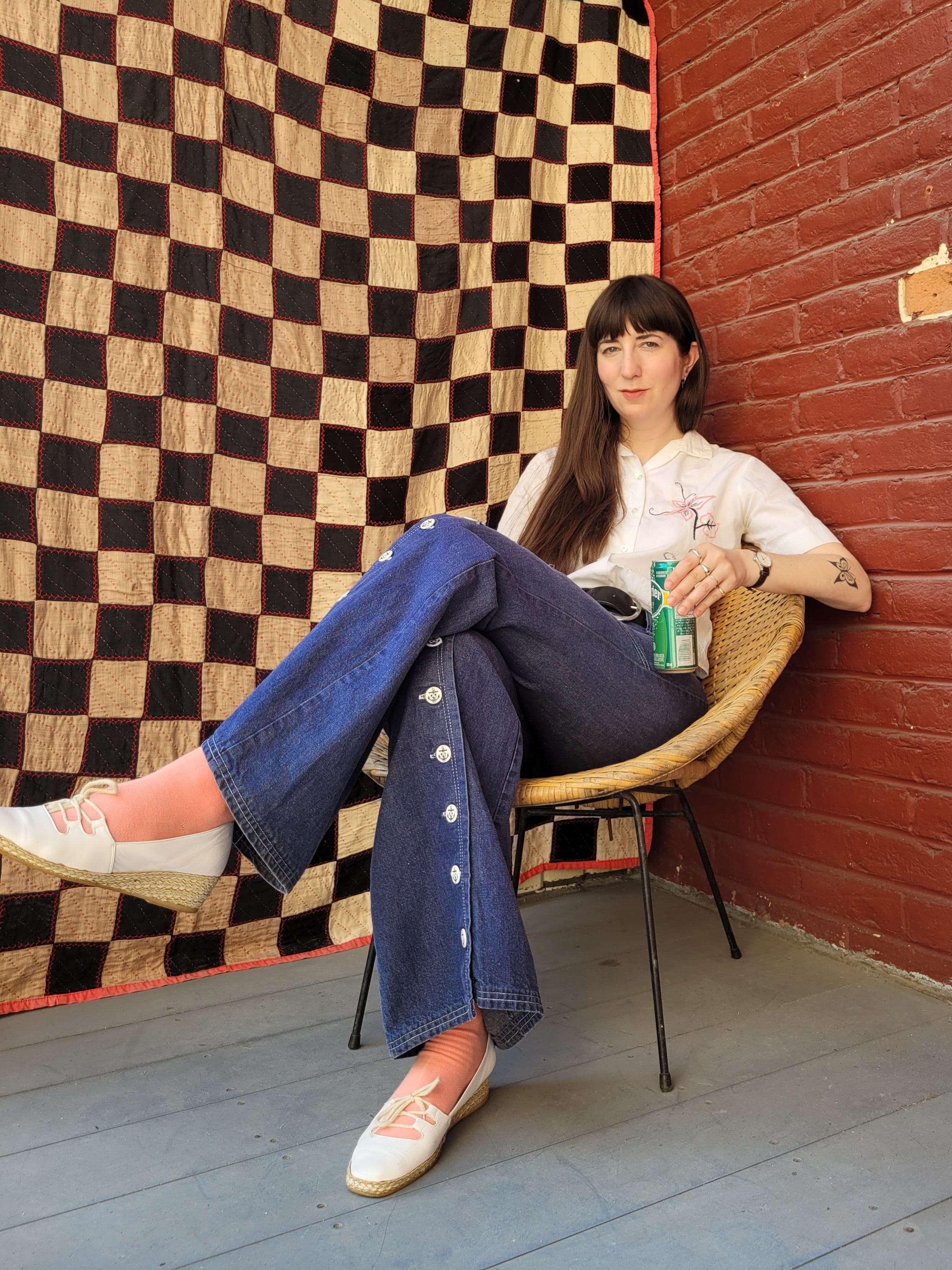
[Pictured: Camille Benoît on her balcony]
Launched over fifteen years ago, Oui Allô is a vintage veteran. Quietly stocking some of Montreal's most beloved secondhand boutiques for over a decade — including Annex Vintage and Empire Exchange (where we met; I was staff and Benoît was vintage and staffing manager, as well as a supplier) — Benoît has left her mark on the Mile End. In fact, if you live in the neighbourhood, odds are high that she has picked out one of your fave vintage finds. For faraway customers, she also runs an online shop on Instagram and Etsy — and Torontonians can look out for her at the annual Toronto Vintage Show in the fall. But she wasn’t always an expert. Born to a big family, her fashion education started with hand-me-downs from cool older cousins and later, magazines and Le Chateau.
“In the early 2000s there was this strong 70s revival, and I was middle school age then,” Benoît explains. “My mom was watching me dig through magazines and Le Chateau had just launched a website where you got to see a preview of what you would see in store, and I was just so amazed by all the peasant blouses and bell bottom jeans. I was picking out dream outfits and my mom was like, ‘I had something exactly like this in my twenties.’ She explained to me how fashion comes back and from that point on I was obsessed with trying to find old things. I wore some of my mom’s old things that she still had, trying to find old things my family members wore.”
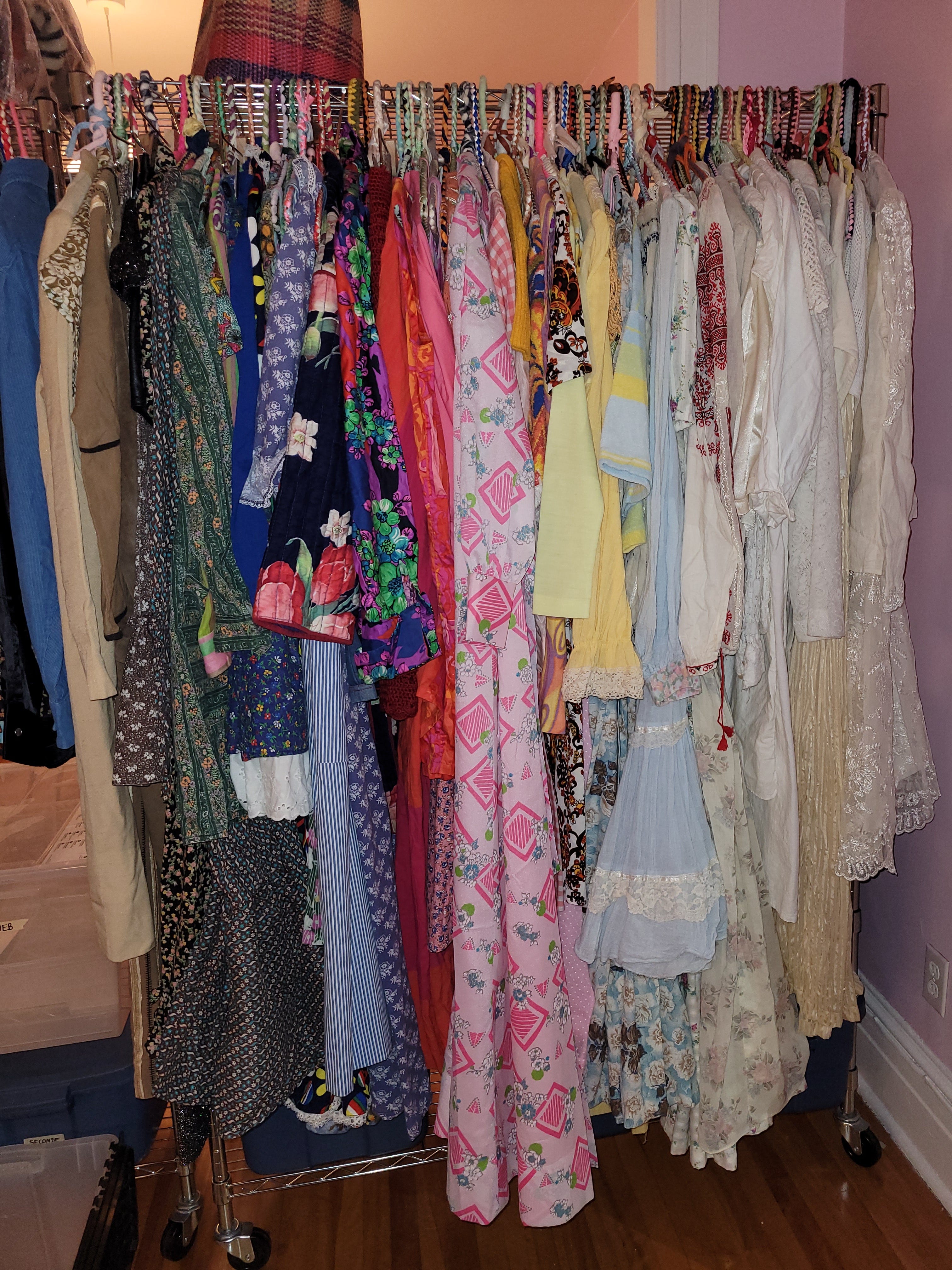
[Vintage closet of your dreams]
By the time Benoît was 18, she had left her home in Hull to move to Montreal. Partially to beef up her own closet and partially to explore her passion for vintage, Oui Allô was born. Although the business has had many names over the years, the mission remains the same: out with the new, in with the old. But staying in business (and remaining relevant) for over a decade is a difficult task — especially with the rise of TikTok-endorsed Amazon storefronts and a booming microtrend industry.
“In the past, you had to wait a year for something that was in the fashion shows in Paris to really make it to the mainstream whereas now you get knockoffs within months — if not weeks! So in the way of production I would say trends are coming very fast. And I think the internet accelerates microtrends. But the overarching revival is, I think, following a fairly normal trend cycle” (CB).
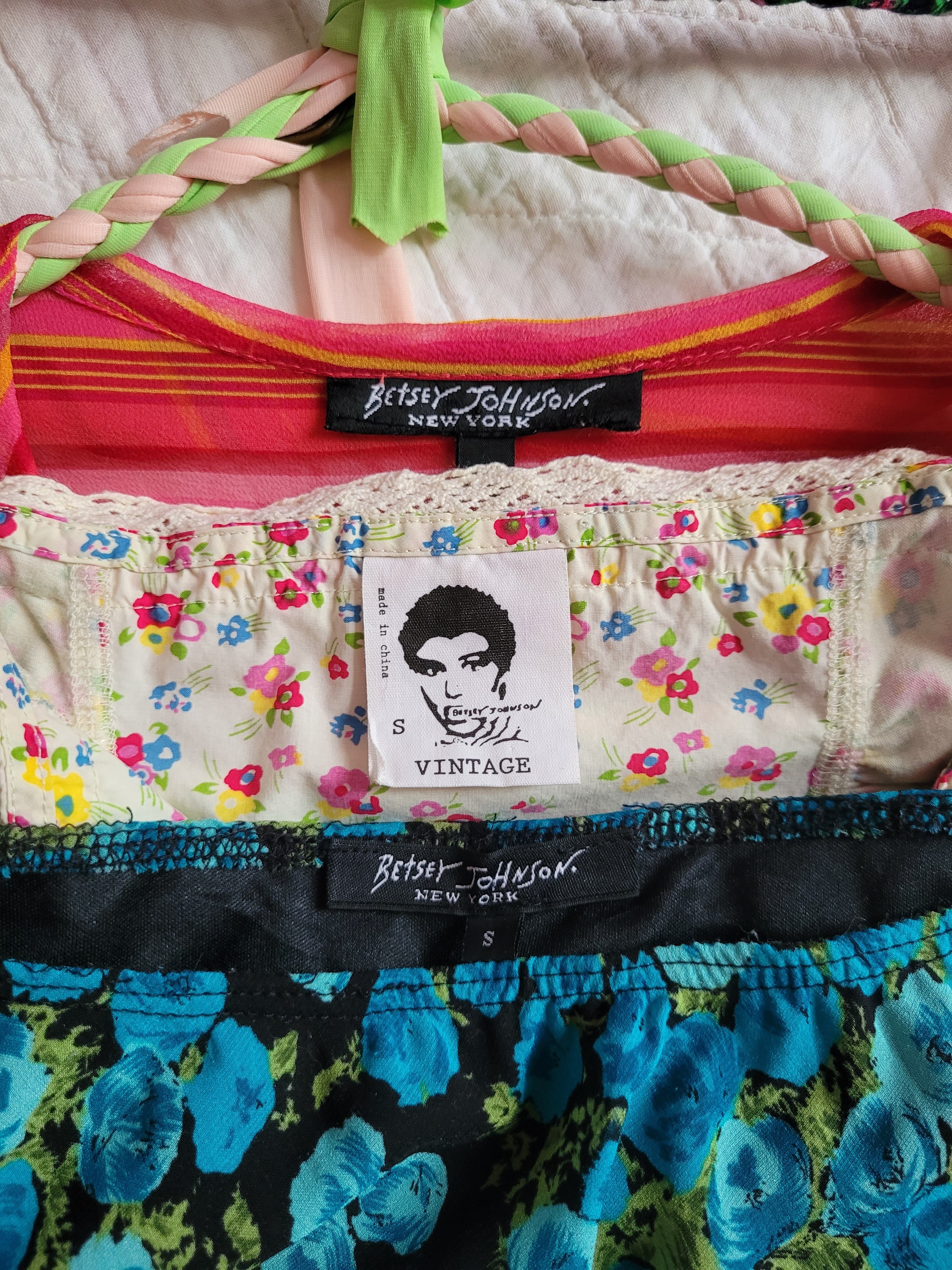
[Betsey Johnson stack]
As a supplier to youth-oriented shops, dealing in trends is inevitable. You want your clothes to sell, right? But as a vintage dealer, quality materials and high-fashion garments are key. “In the vintage world, there’s something for everyone. When I buy for Annex, especially because space permits and the turnover is really fast, I buy things that I know people are looking for so that’s vintage and trends and good quality classics. I would say that's the three criteria I look for. When I do my own vintage online, I just buy what I like. And I think that just reaches specific niches” (CB).
Plus, colours go through cycles too. Pantone’s colour of the year dominates the fashion and design world, from 2023’s Viva Magenta to 2025’s Mocha Mousse. And Miranda Priestly lovers recall the power of cerulean in soon-to-be-sequelled The Devil Wears Prada. For suppliers, some colours are even cursed…
“I would say blue is probably the one colour that will never be cursed, like the range of classic denim blues,” Benoît explains. “Cool pinks are also quite safe bets. Nobody wanted anything in khaki or beige for a few years. I had beige banned when I was managing consignment because nobody wanted it. But now beige is a hot colour. And people think it is very flattering, no matter the shade.”
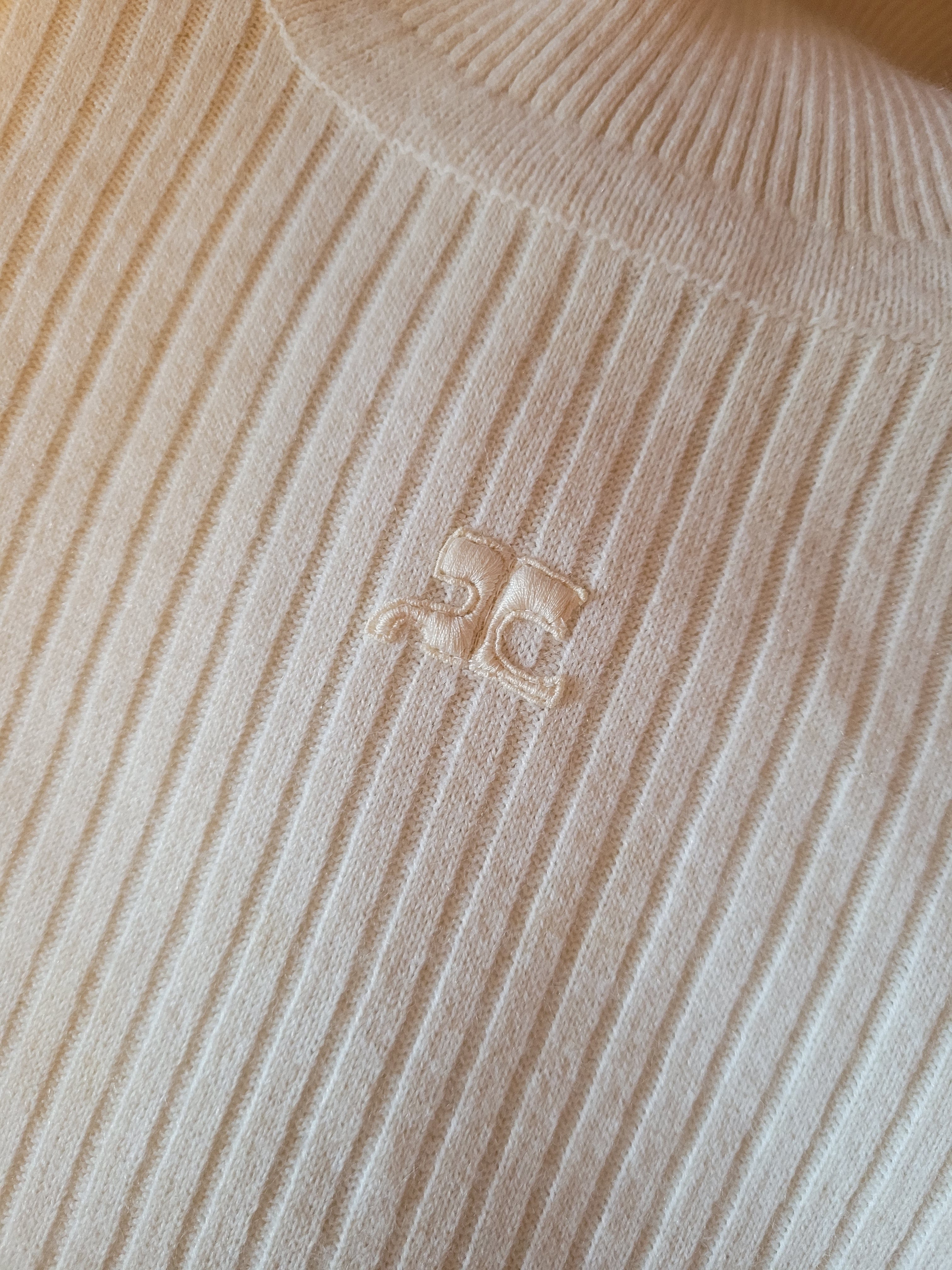
[Cream-coloured Courrèges sweater.]
In the end, vintage dealing will always ebb and flow. An ancient profession, people have been selling second hand garments and using them as currency for thousands of years. For Benoît, “Vintage selling itself is part of a trend cycle. It’s a really hard job and it looks really cool but it's not glamorous and you have to persevere and you have to update yourself.”
“Every 19-24 year old who was slightly alternative has been a vintage seller at one point. In my generation, not many of the people I knew who were doing it are still doing it to this day. And I think that before that there was something very similar. When I moved to Montreal in 2008, it was kind of the end of this big vintage retro era. And Mont Royal Street and St Laurent used to be filled with vintage shops and all of them have closed down. But now they’re popping up again” (CB).
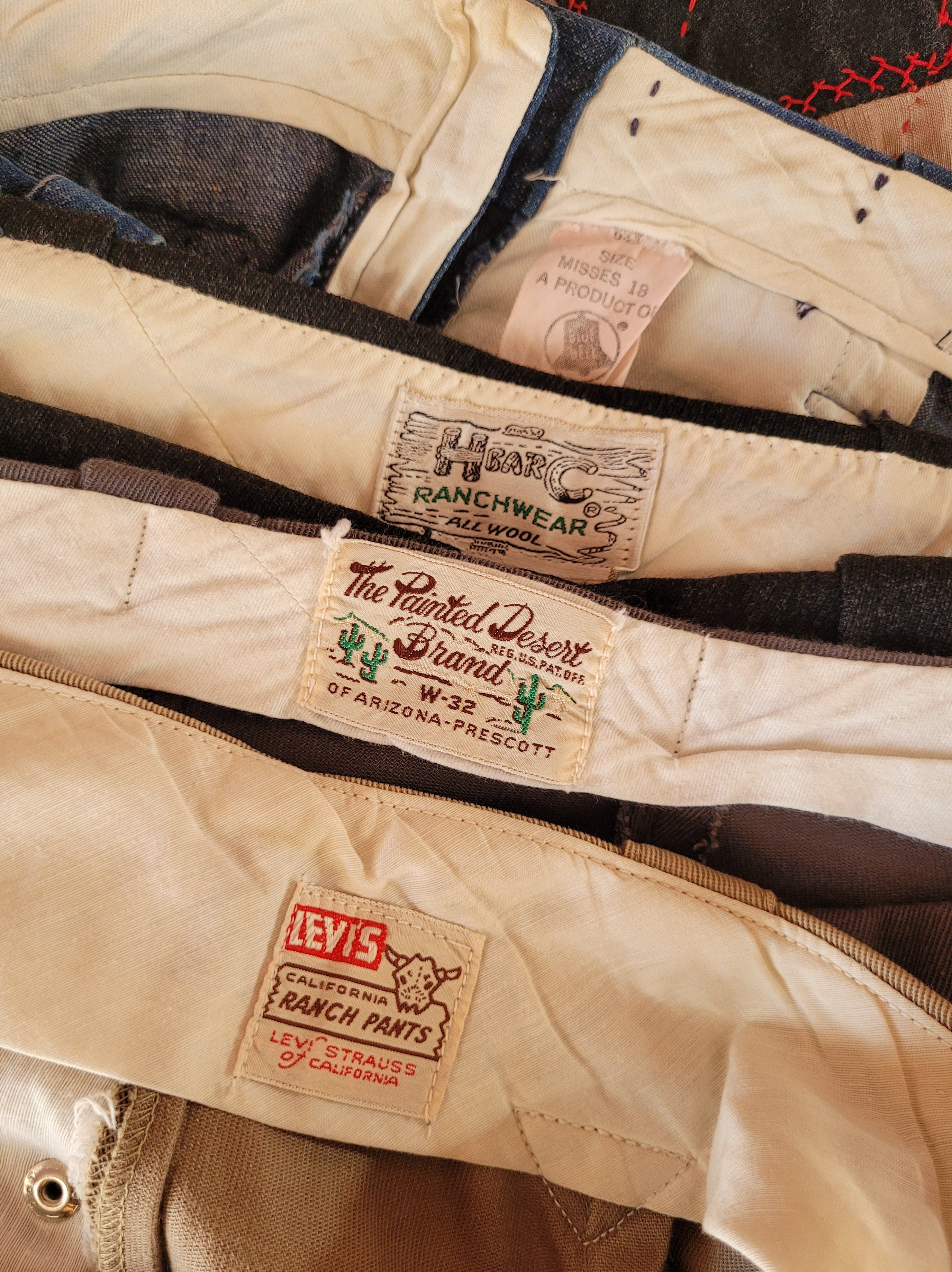
[Levis and other classic ranchwear]
And Oui Allô is right up there with them. Whether it's a favourite deadstock 1940s lingerie set or a pair of JC Penney workwear overalls, true vintage tells a story. And for those willing to take the time, there’s lots to learn.
“My absolute favourite part is finding something that has a history and being able to learn more about the world around that piece and the manufacturing. What that piece meant within the context it was initially worn in and having a cool physical object to lead me to that” (CB).